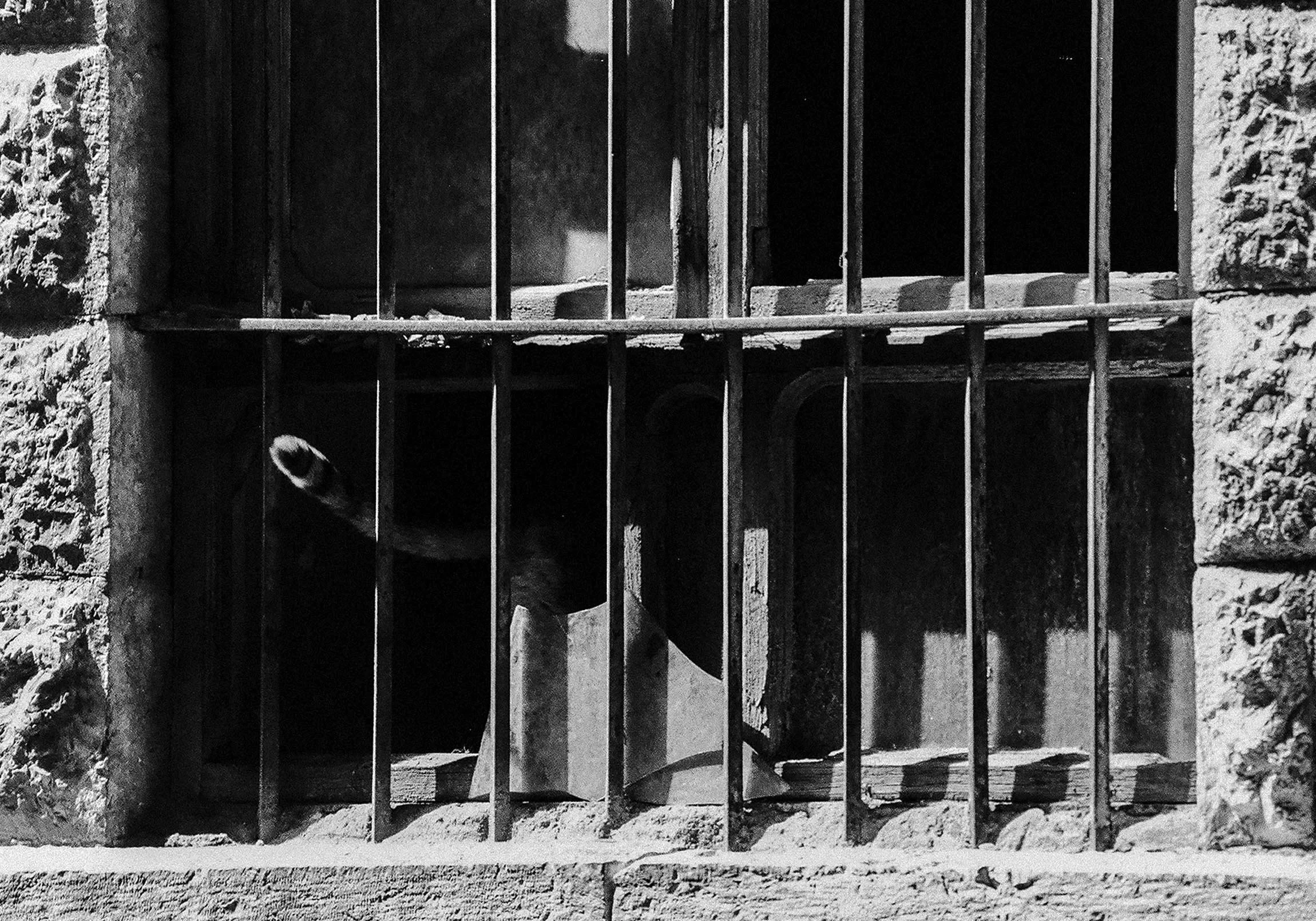
Refugee Cats
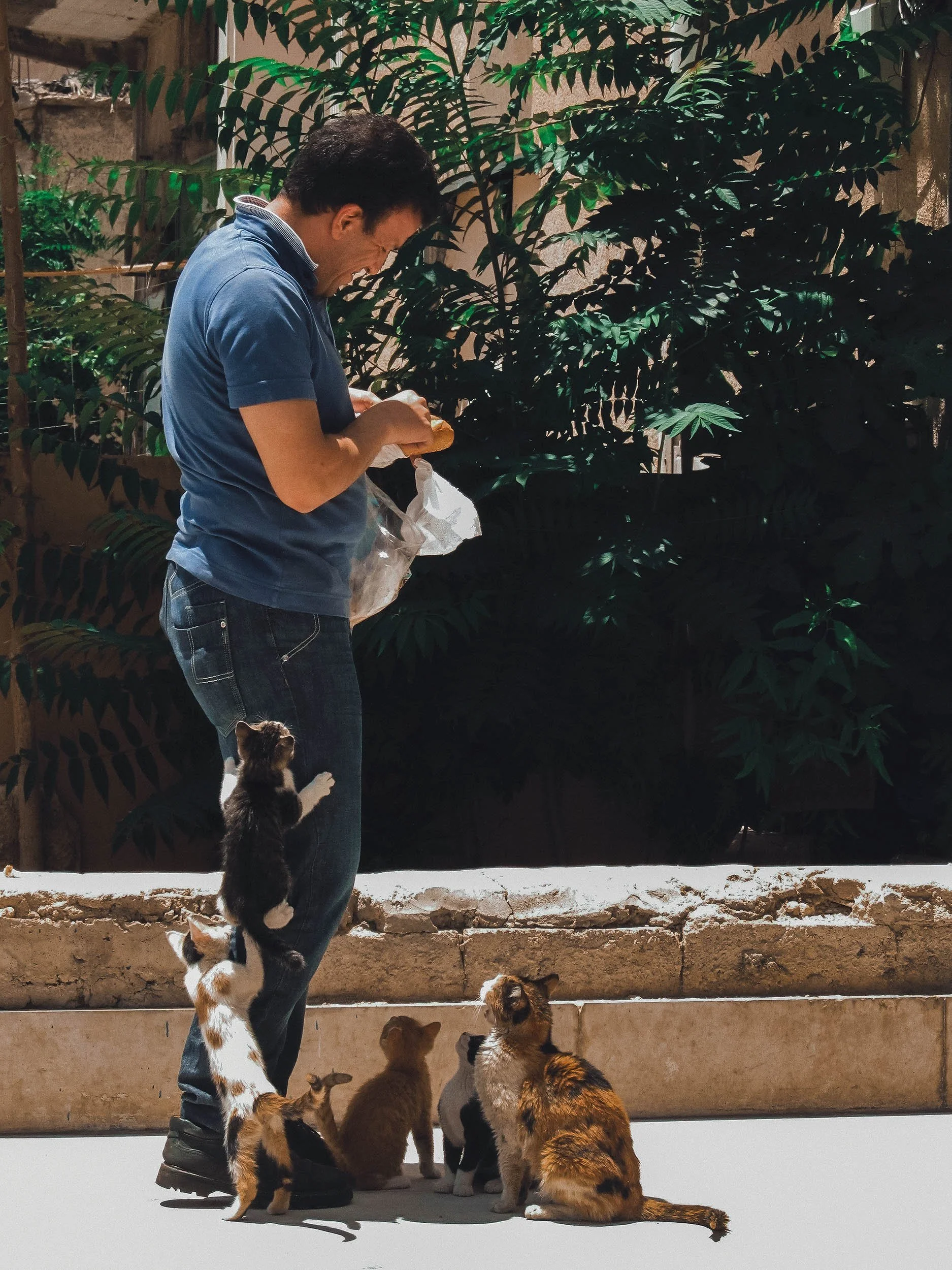
Refugee Cats looks beyond war headlines and statistics to the shared lives of people and animals shaped by displacement and fear.
Through the presence of cats as quiet witnesses, the project reflects on daily life under violence and exile, and on how seeing changes when home is lost.
To my friend Muthna Hamzawi who used to take out the cheese from his sandwiches to feed the neighborhood cats on daily basis I dedicate this project trying to reach out to him with the remnants of the dry bread he had left on the side of the roads without anyone taking heed.
Muthna was arrested in one of his many attempts to secretly sneak food to civilians in the besieged areas around Damascus. He became a martyr later when he was subjected to torture in one of the Syrian regime's prisons.
Through this project and for all the cats on this planet I take out the cheese from my sandwich.
Refugee Cats was supported by the British Council in 2015, and reflects on how war changes daily life, survival, and the way we see.
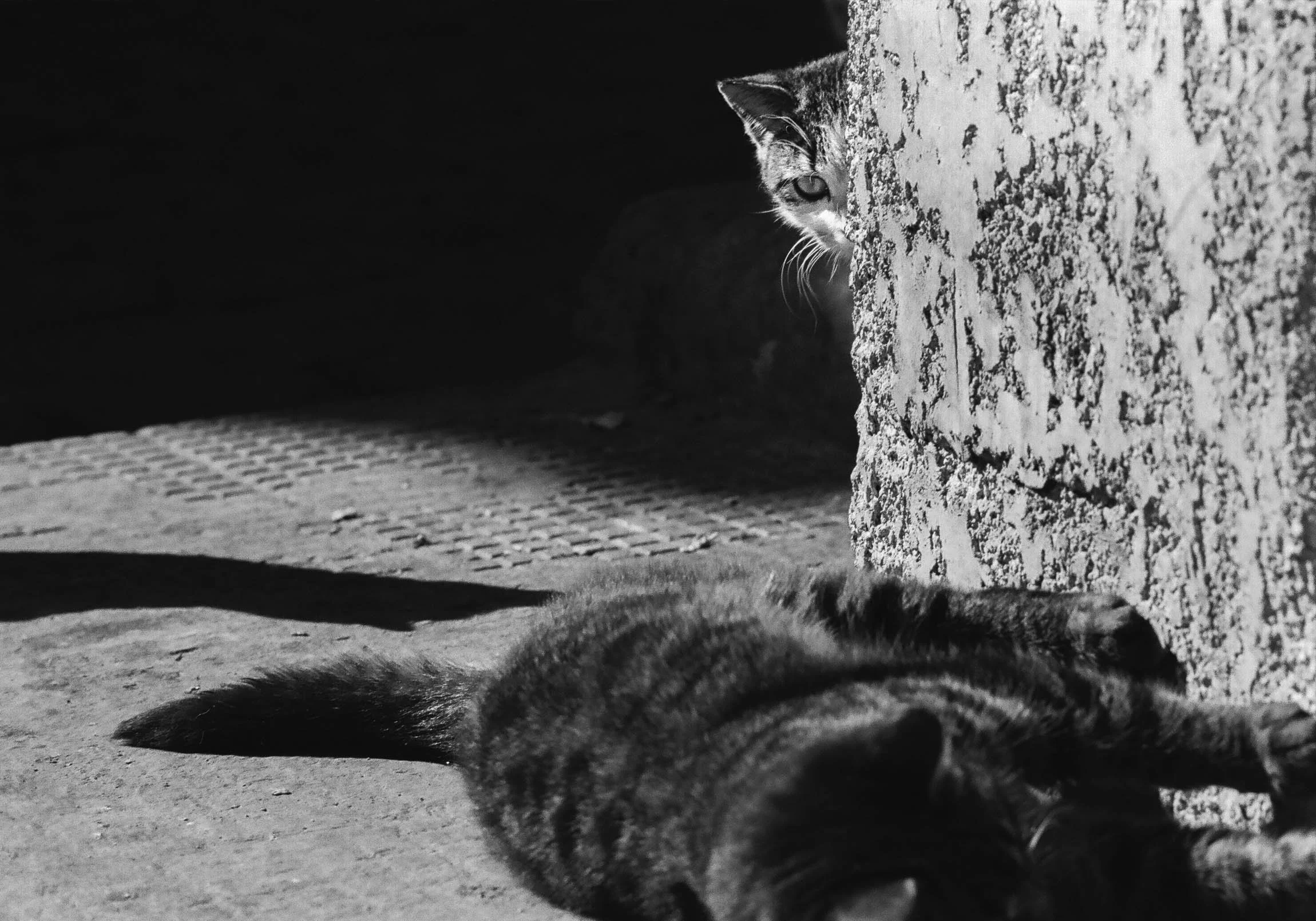
Awaiting the return of the forcefully disappeared
Beesti, the cat, gave birth seven times since the incarceration of Abdul Kader on June, 26th, 2013. She was the only cat, from a consecutive generation of the house cats spanning fifty three years, which had a strong relationship with her son. She’s been at Faten’s house for two years and a few months now, still waiting for the door to be opened at any moment and her son to come back from Syria bringing along with him pictures depicting stories from the ugly war.
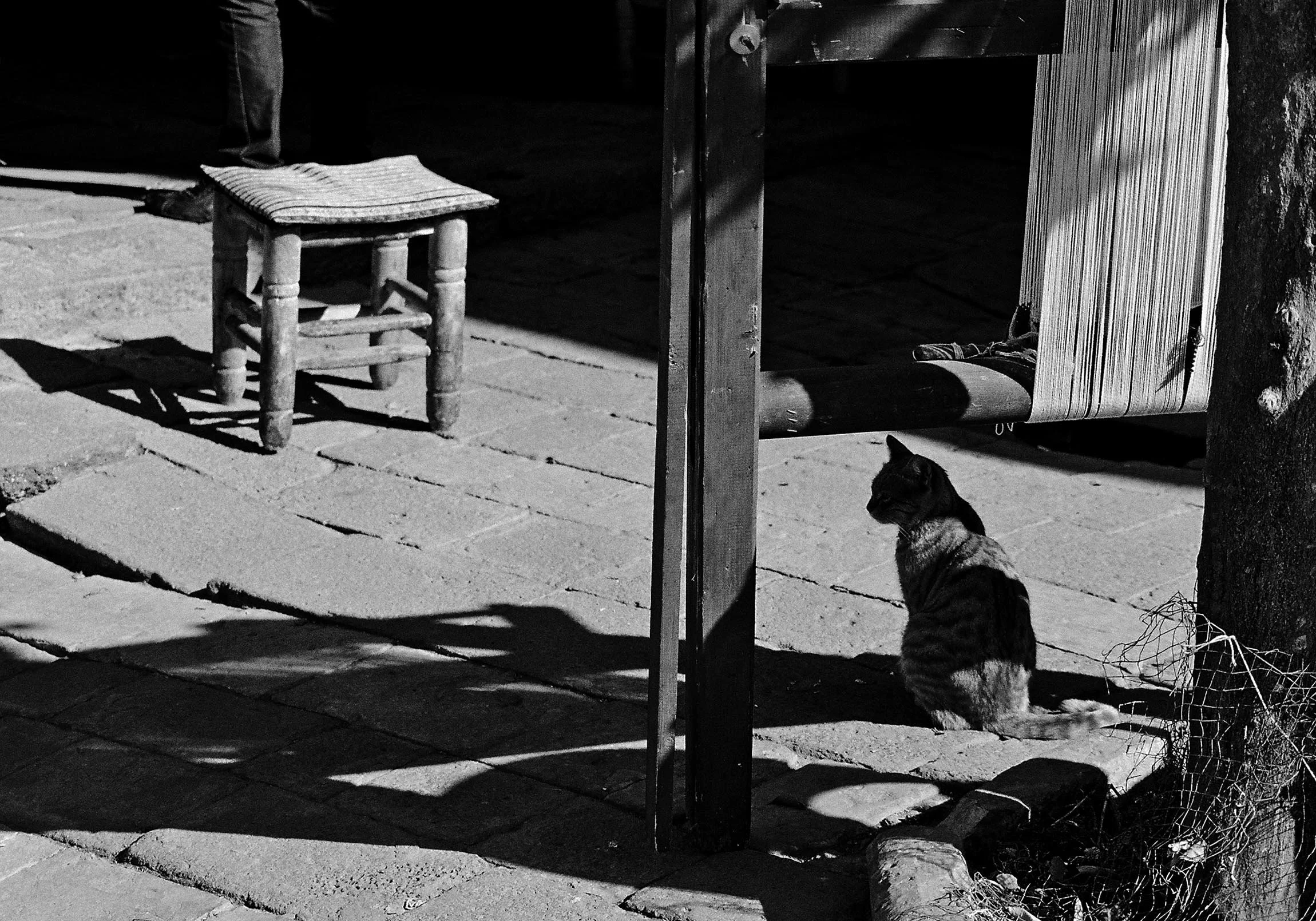
Migrant Cats
After many long trips and carrying bags that embrace our identity more than our passports, Maksim settled in Urfa city, a Turkish town located near the Syrian border. Before moving to Turkey, Maksim was living in Algeria, the country he went to after leaving Syria in 2012.