Awaiting the return of the forcefully disappeared
Beesti, the cat, gave birth seven times since the incarceration of Abdul Kader on June, 26th, 2013. She was the only cat, from a consecutive generation of the house cats spanning fifty three years, which had a strong relationship with her son. She’s been at Faten’s house for two years and a few months now, still waiting for the door to be opened at any moment and her son to come back from Syria bringing along with him pictures depicting stories from the ugly war.
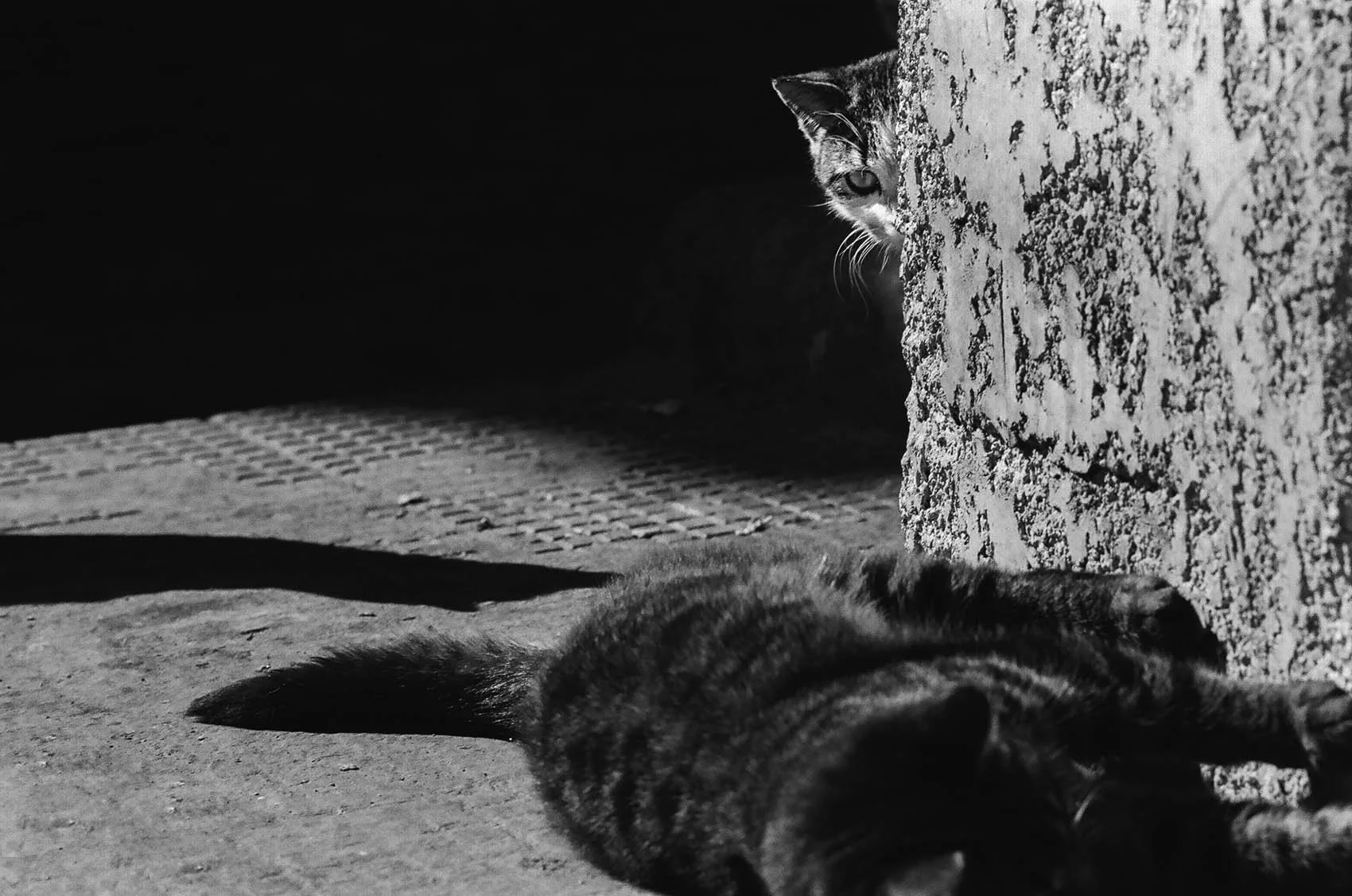
Syria 2010
Faten Ajjan
An independent journalist who gave up her job in the Syrian TV in May 2011 when the crew members were coerced into distortion and disinformation of facts to the detriment of the country. Her son, Abdul Kader, nicknamed Abboud Haddad, dodged the draft for the same reasons as well. Hence they both had to flee to Turkey for their lives. Abboud later worked as a field cameraman filming news as they happen, up until he was arrested on his way back to Turkey by a group belonging to the “Islamic State” organization. He is still languishing in their prisons up till now.
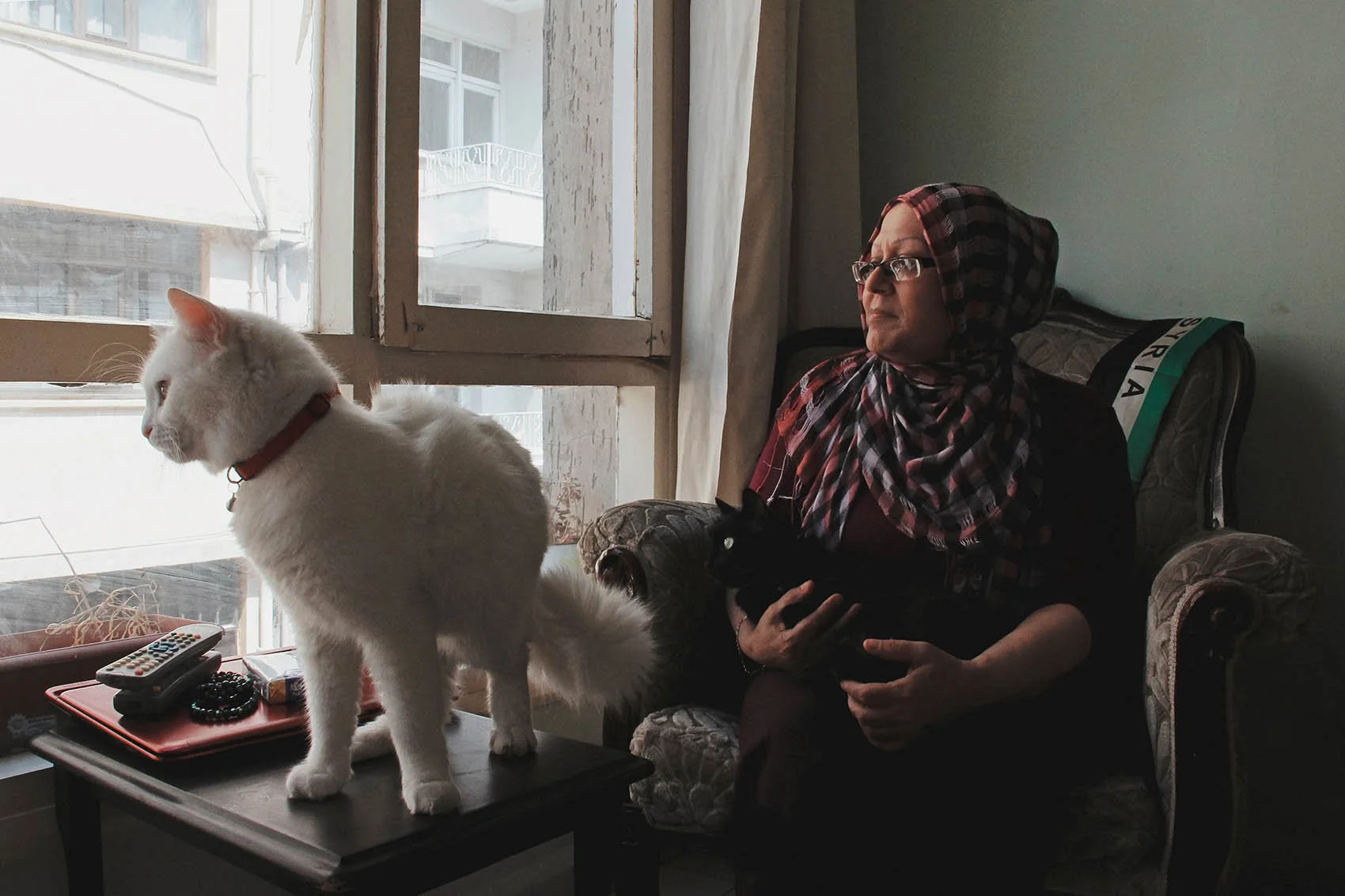
Antakya, Türkiye 2015
Beesti
After that many things changed, not last of which was when she moved to Antakya to live with her husband Cookie. She became less curious and oblivious to the doorbell or whoever rang it. This was quite unlike her or unlike cats in general who are usually attentive to all the movements around them, especially the main door which ushers in visitors and gusts of soft wind. Day after day. Beesti lost hope in Abboud’s smell approaching her at every knock at the door. Faten’s eyes, though, were still watching her and the door.
A Syrian cat, born in Latakia 2008. Abboud adopted her father when he was a little kitten on one of the streets in the city back then. She stayed with him up until the time to emigrate to Turkey.
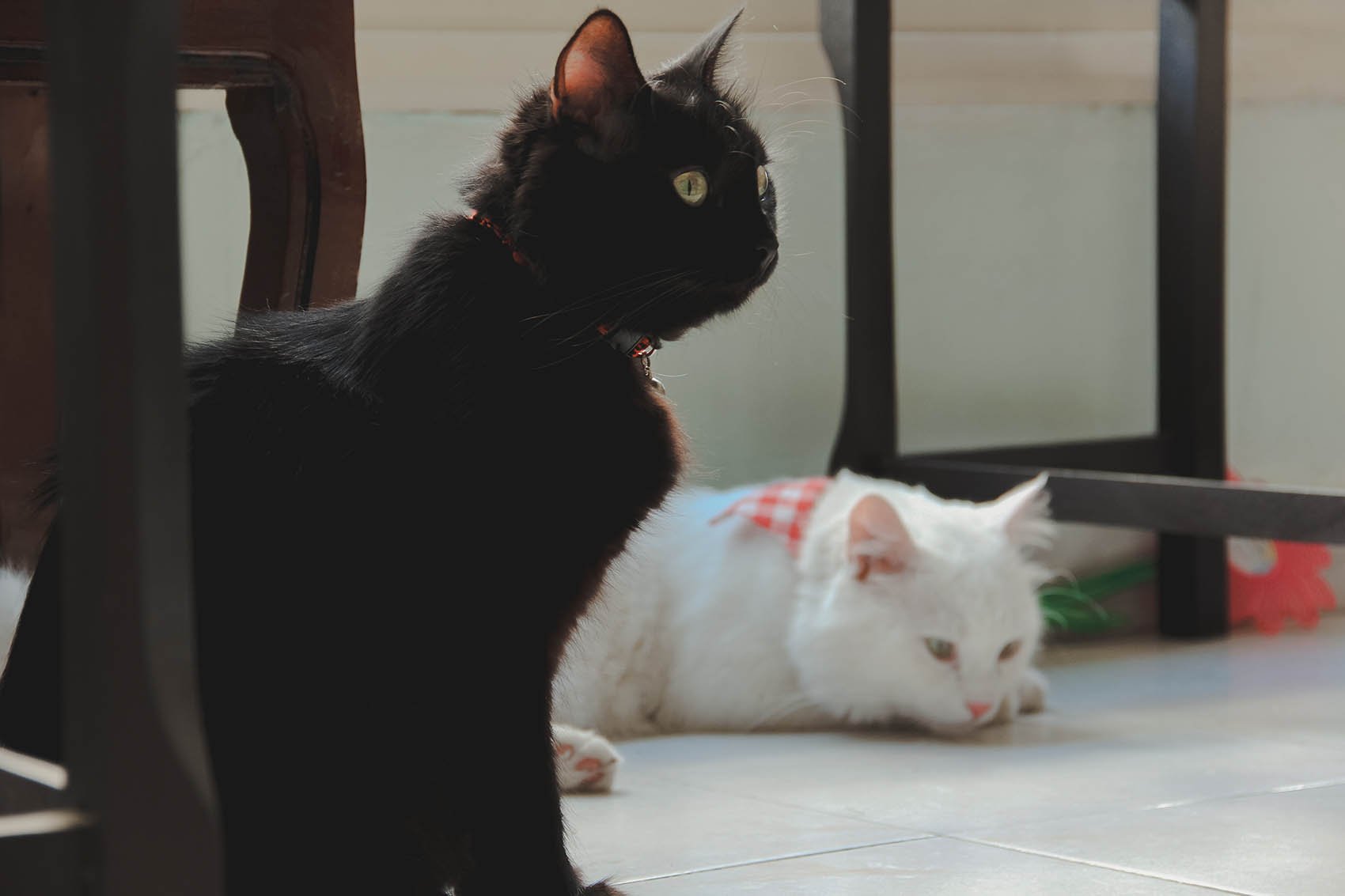
Kasab Border Crossing
In the months prior to the disappearance of Abboud, he asked his uncle if he could take Beesti along with him to Turkey when he decided to go. Aboud, like his mother, had to go illegally to avoid capture. None of them was able to take her. As usual in those situations of blackmail, she was not able to leave Syria without paying money, even though she had a health card and official papers
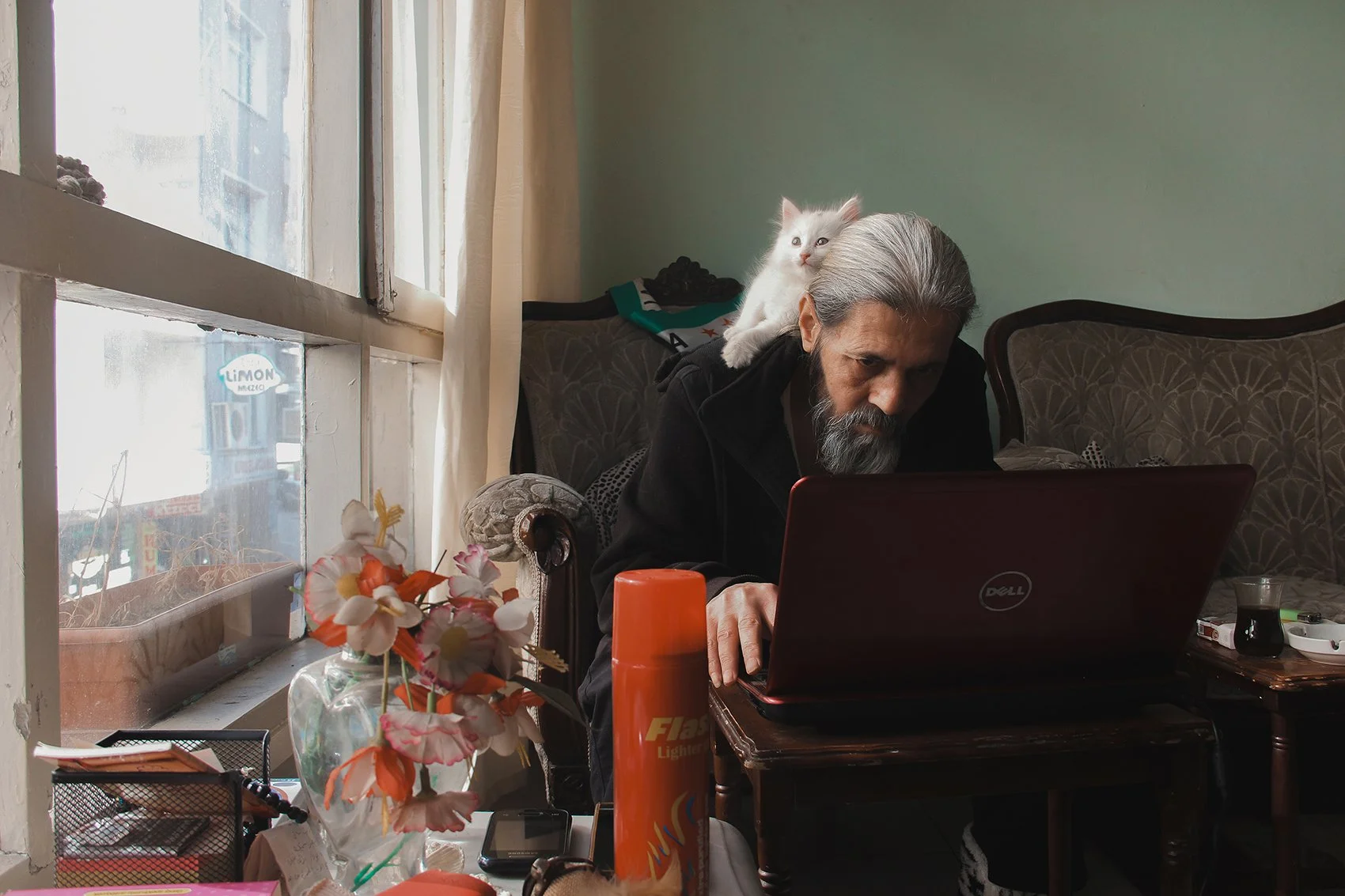
Homeland
Faten spent her childhood in a house which understood the animals’ lack of ability to express their vulnerabilities. Her memory can conjure up places and scenes of generation after generation of house cats. Even now, outside Syria, Beesti’s descendants are scattered, like the Syrians they live with, across the Turkish map.
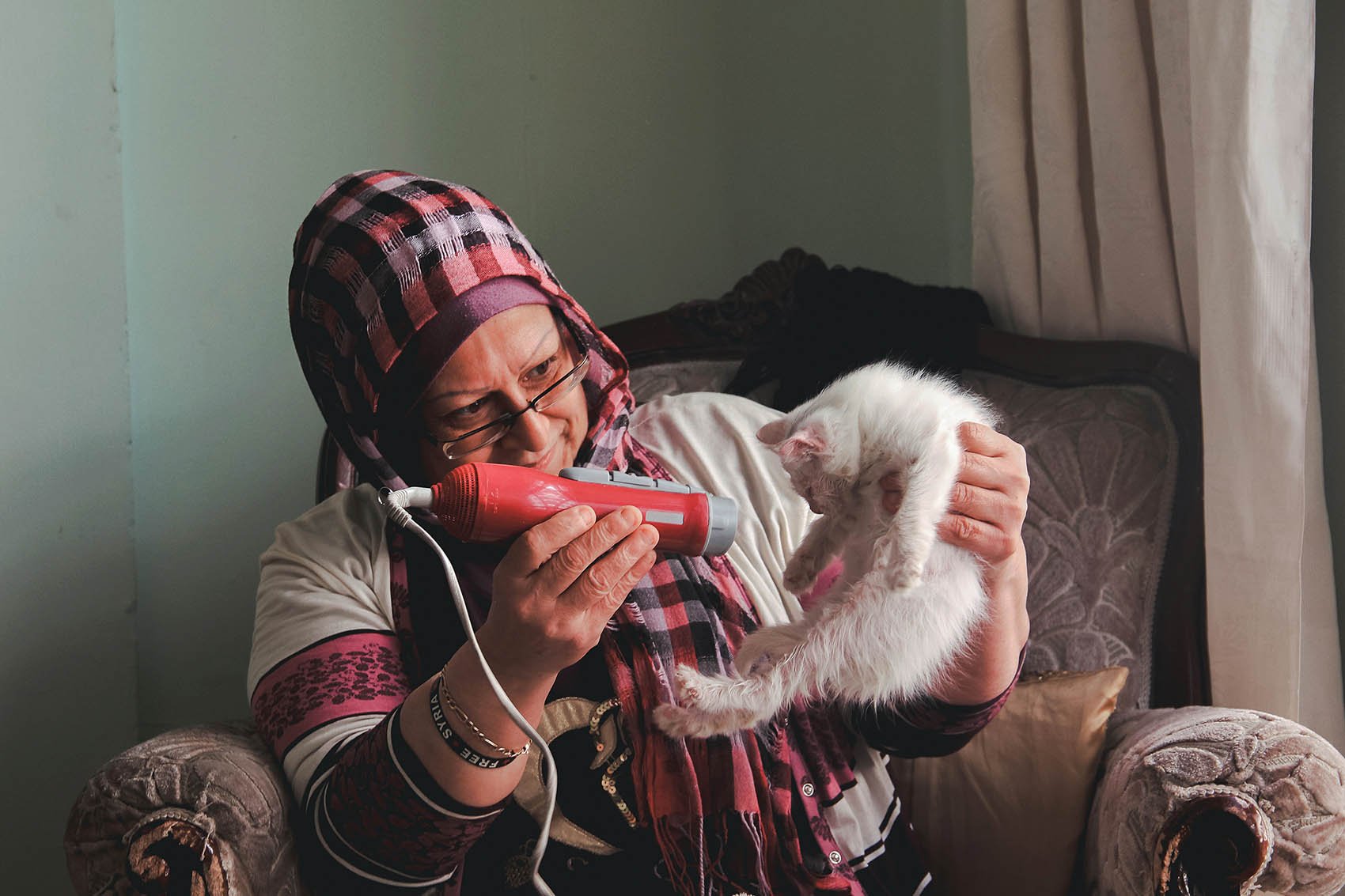
Once again, my presence in Antakya coincided with the time she was mulling with her brother Talal the idea of moving to a new house. On our way to it, we crossed the Orontes River which flows from the Syrian lands. Along the river banks, she recalled an anecdote that happened when her boy was fourteen years old. She recalled that her son had a high fever, and, “as I was returning to the room to change the wet pads, I found that my cat had soaked his feet with water and was putting them on his chest which was so wet he must have done it a few times repeatedly. Likewise, Beesti’s presence does not give me the impression I am still in Syria. Everything has changed. Beesti means to me Abboud’s safe return more so than it means my return to Syria.
