When the fall turns into a sun
Alice has not returned from her world, at least not yet. It has been a long time since I last saw her faceless face.
All the paths of reason insist she fell into the hole, yet a voice inside me keeps repeating:
“It is the light, Alice… what is light?”
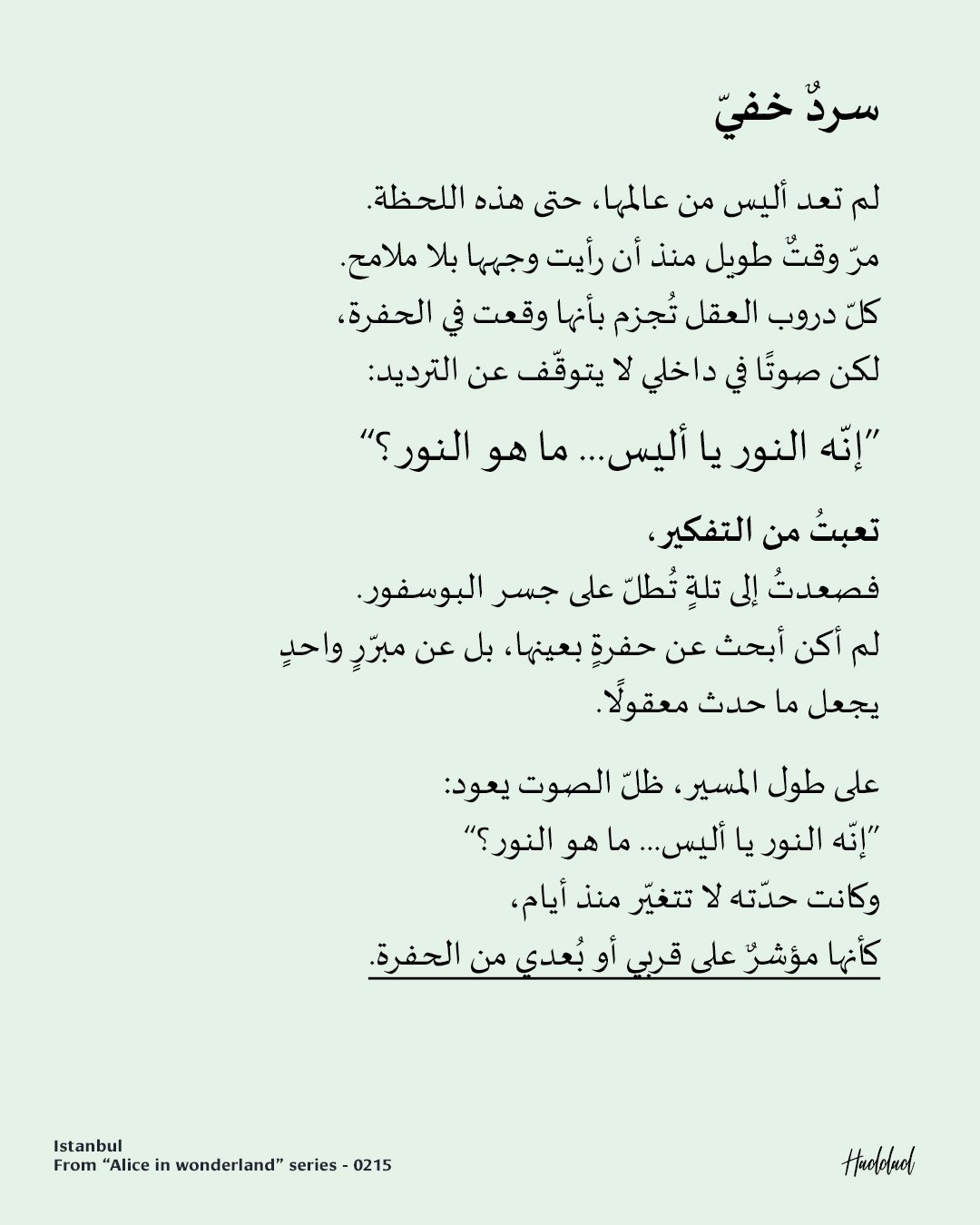
حين تُصبح الحفرةُ شمسًا
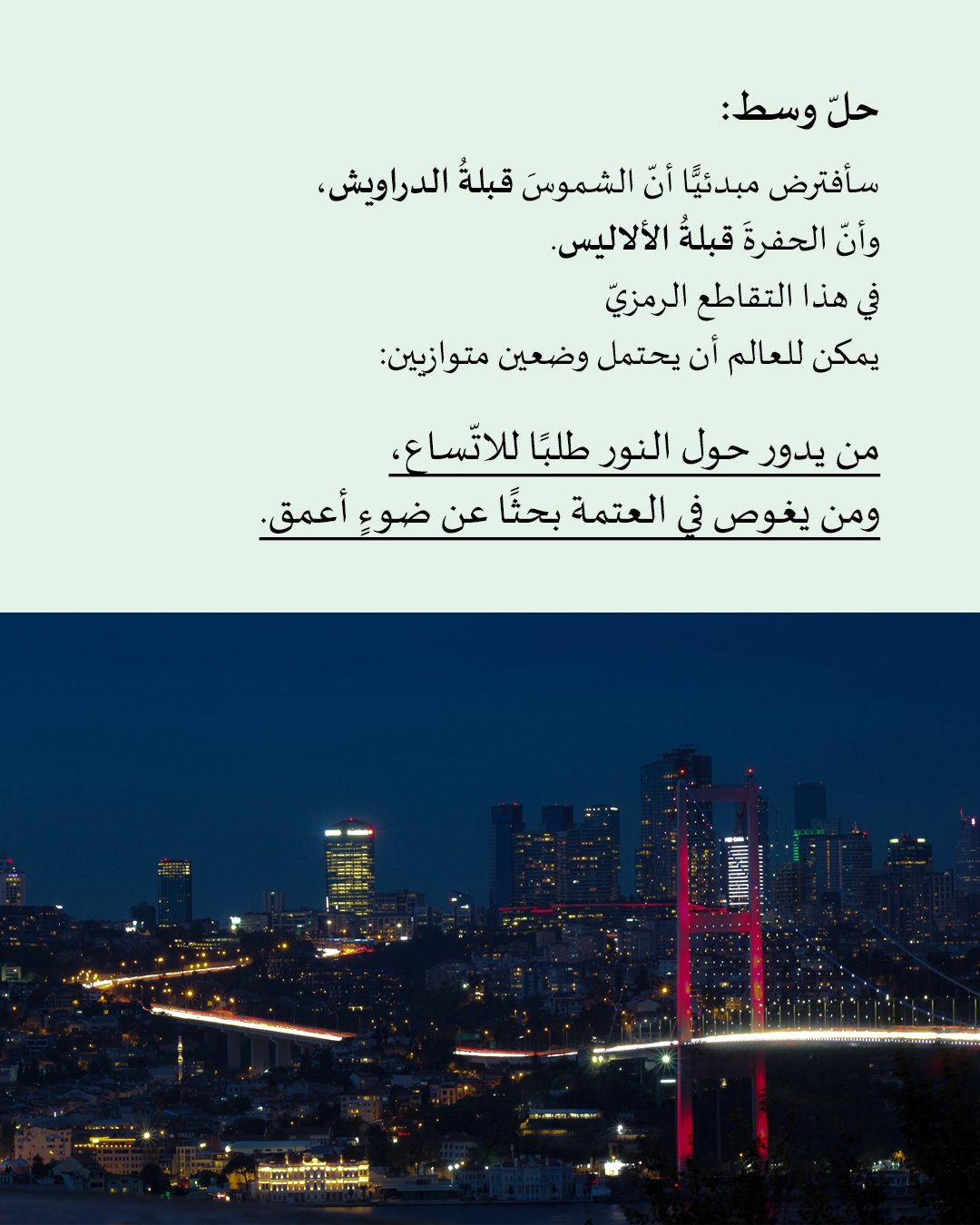
Tired of thinking, I climbed a hill overlooking the Bosphorus Bridge. I was not searching for a specific hole, but for a single reason that could make what happened feel reasonable. Along the way, the voice kept returning:
“It is the light, Alice… what is light?”
Its intensity never changed over the days, as if it were a gauge measuring how close or far I was from the hole.
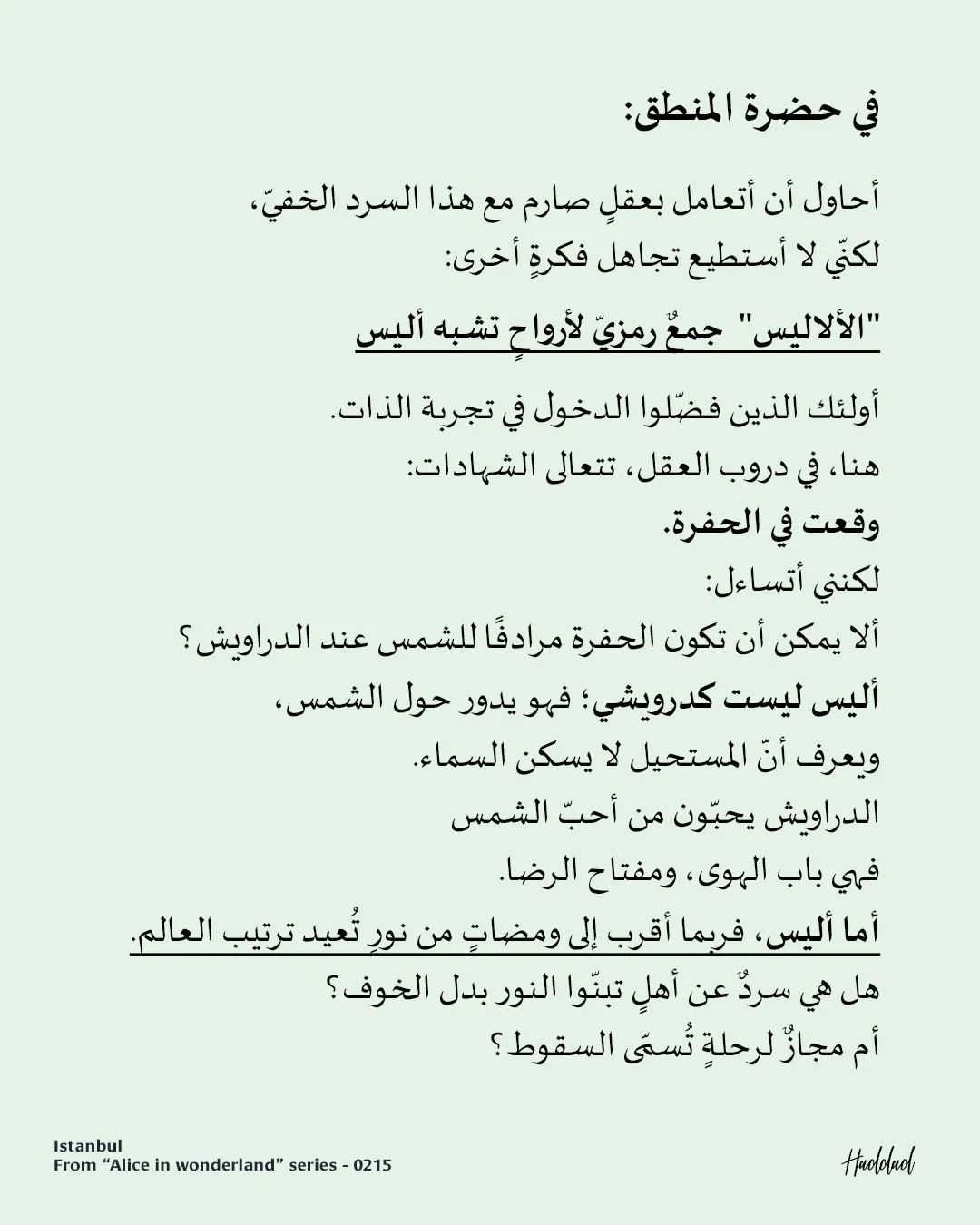
In the presence of logic, I try to deal with this hidden narrative using a strict, disciplined mind, yet I cannot ignore another idea:
“the Alices,” a symbolic plural for spirits resembling Alice, those who chose to enter an experience of the self. Here, along the paths of the mind, the testimonies rise:
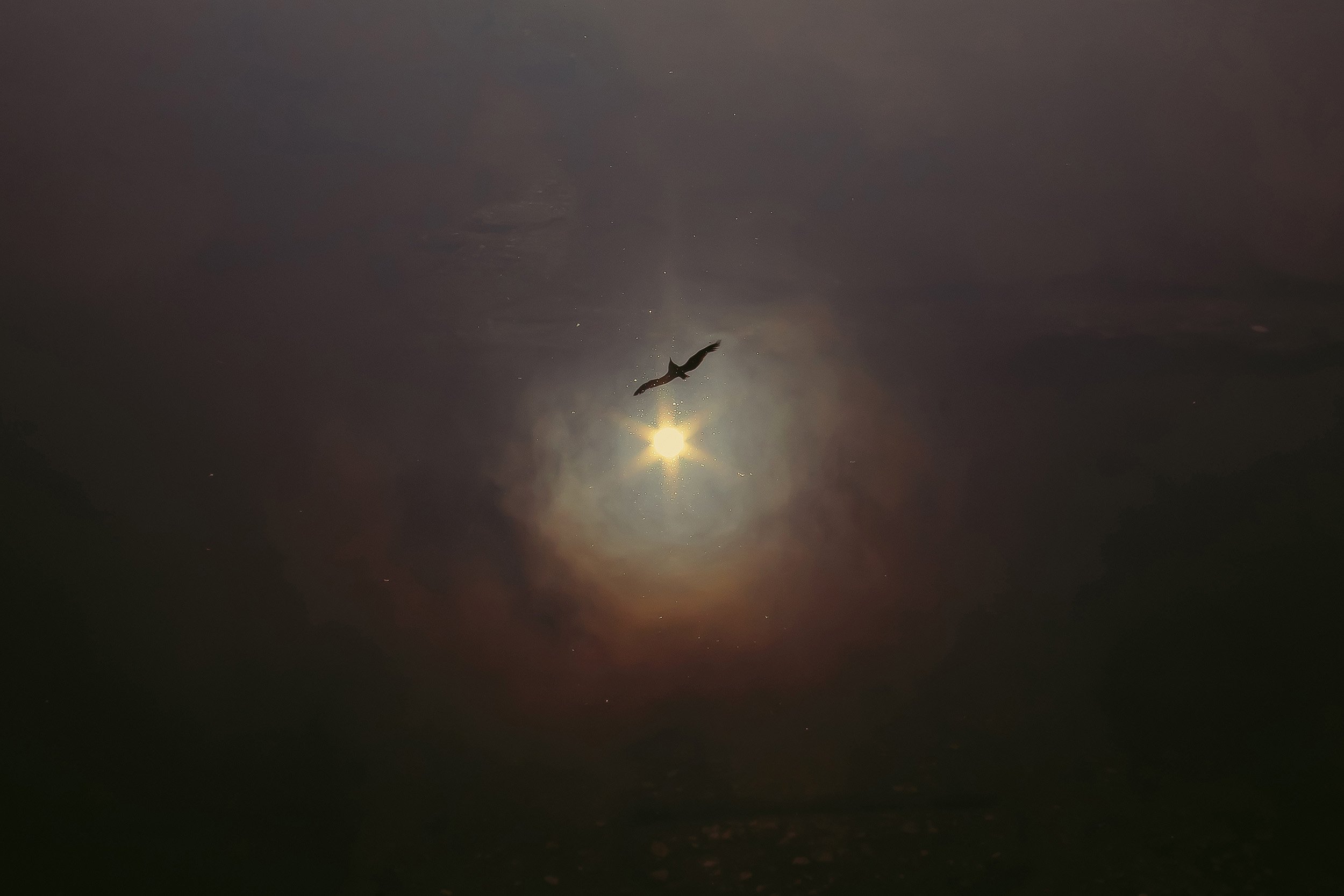
she fell into the hole.But I wonder, could the hole be the dervishes’ word for the sun?
Alice is not like my dervish.
He circles the sun
and knows that the impossible does not live in the sky.
Dervishes love those who love the sun.
It is the gate of longing and the key to contentment.
Alice, however, may be closer to flashes of light that rearrange the world.
Is she a story about people who chose light over fear?
Or a metaphor for a journey called falling?
The echo continues:
“It is the light, Alice… what is light?”
I answer myself, trying to quiet the voice so I can think. Falling is not an end, but a transformation. The hole is a symbol of merging with the self, and darkness is the condition for light to appear. Alice did not fall. She entered her own orbit.
Pause
I stopped for a moment and asked:
how can I simplify the appearance of my dervish, when it is something meant to be seen, not told?
Fatigue crept in slowly. To ease myself, I thought of Damascus. Had I not been a neighbor of Muhyiddin Ibn Arabi, perhaps I would not have walked the path of the knowers. This is how dreams move along the slopes of Qasioun, forming friendships with neighbors without us realizing it.
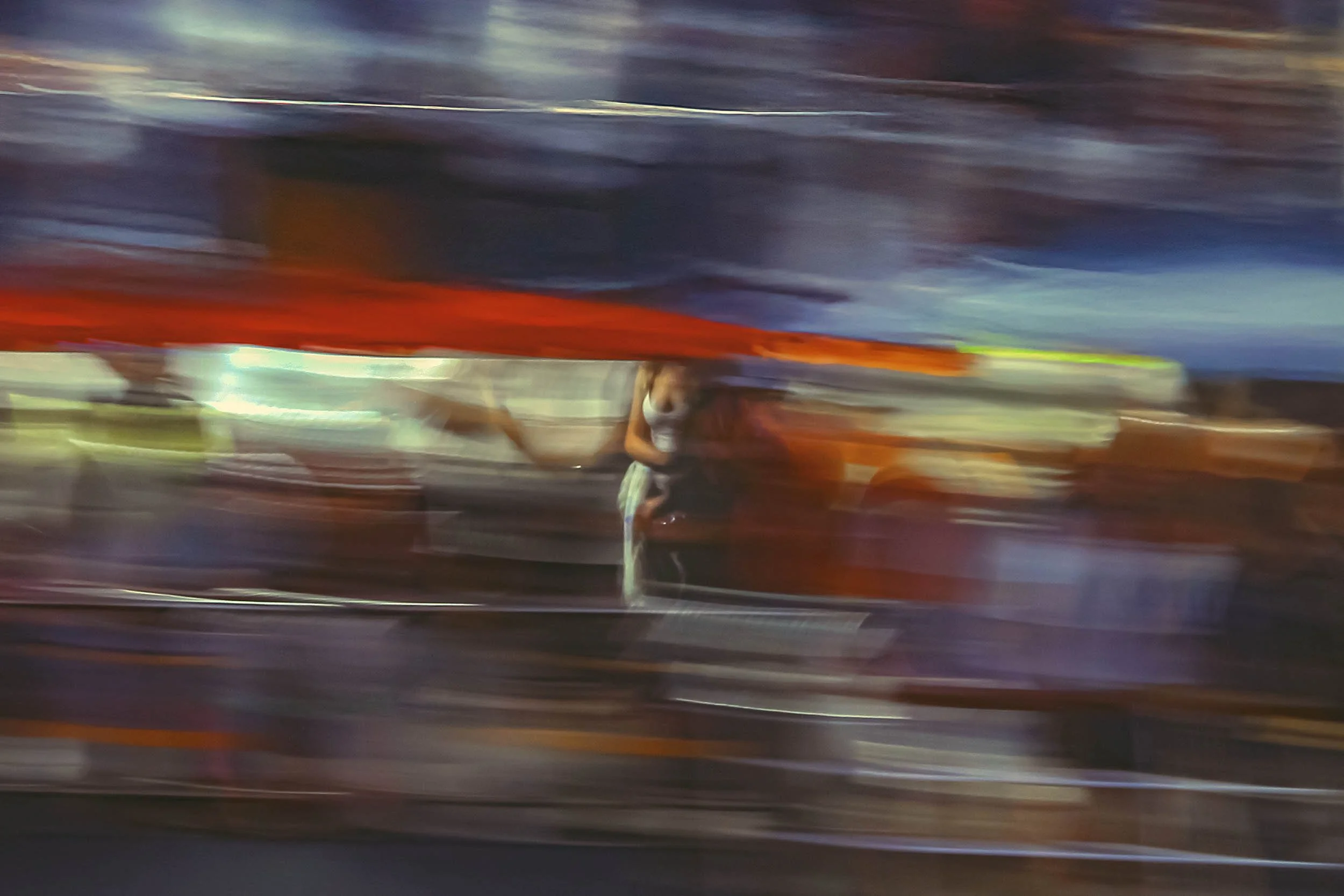
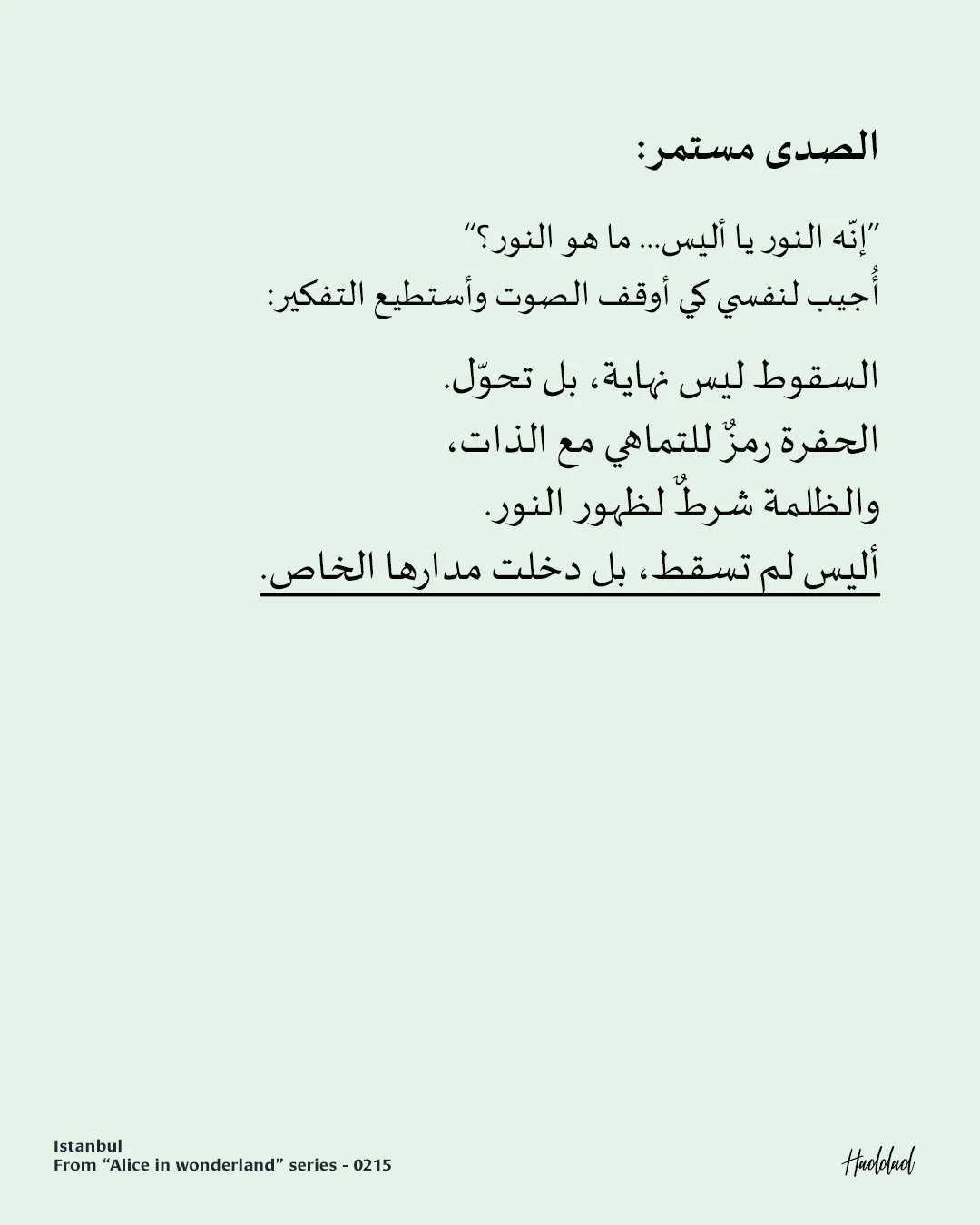
Had I not been a sleep,
perhaps I would have walked with her. Had I been fully awake, dreams would have slept.
These lines repeated like incantations, protecting me from sinking completely into uncertainty.
Then I began descending the hill, murmuring:
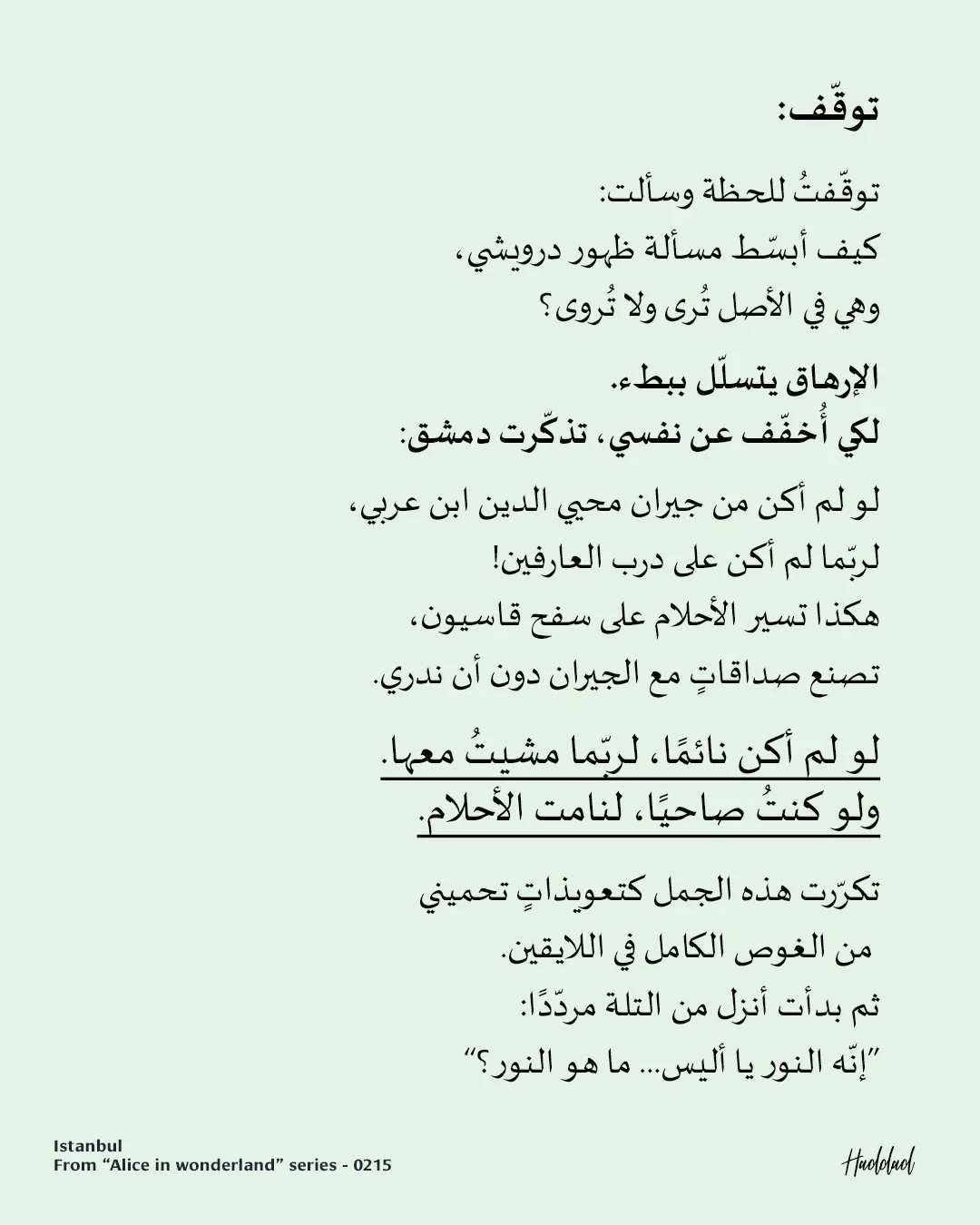
“It is the light, Alice…
what is light?”
A compromise.
I will assume, for now, that the sun is the qibla of the dervishes, and that the hole is the qibla of the Alices.
At this symbolic intersection, the world can hold two parallel states:
those who circle the light seeking expansion, and those who dive into darkness searching for a deeper light.
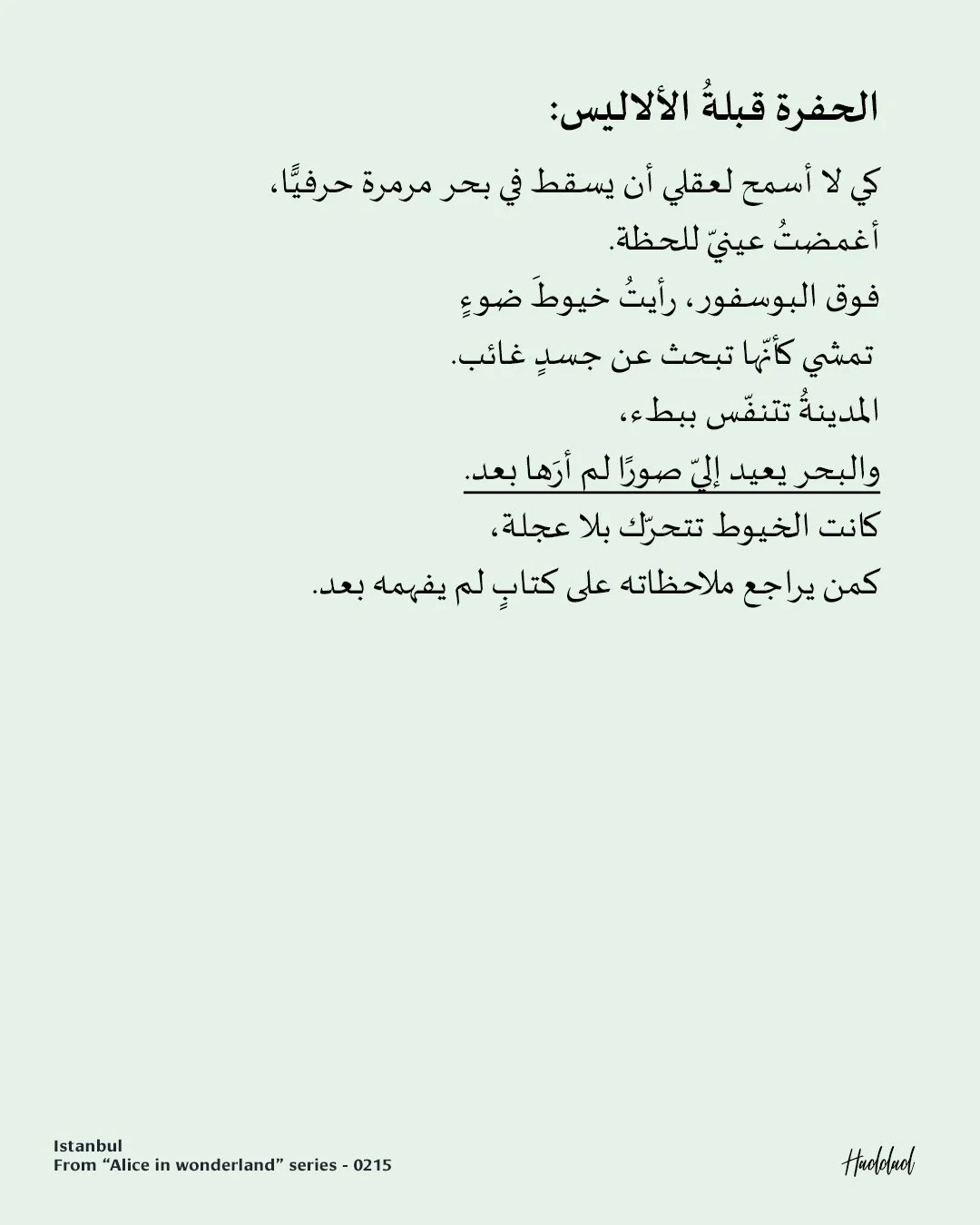
The hole is the qibla of the Alices, the way they choose to face the world.
So that my mind would not literally fall into the Sea of Marmara,
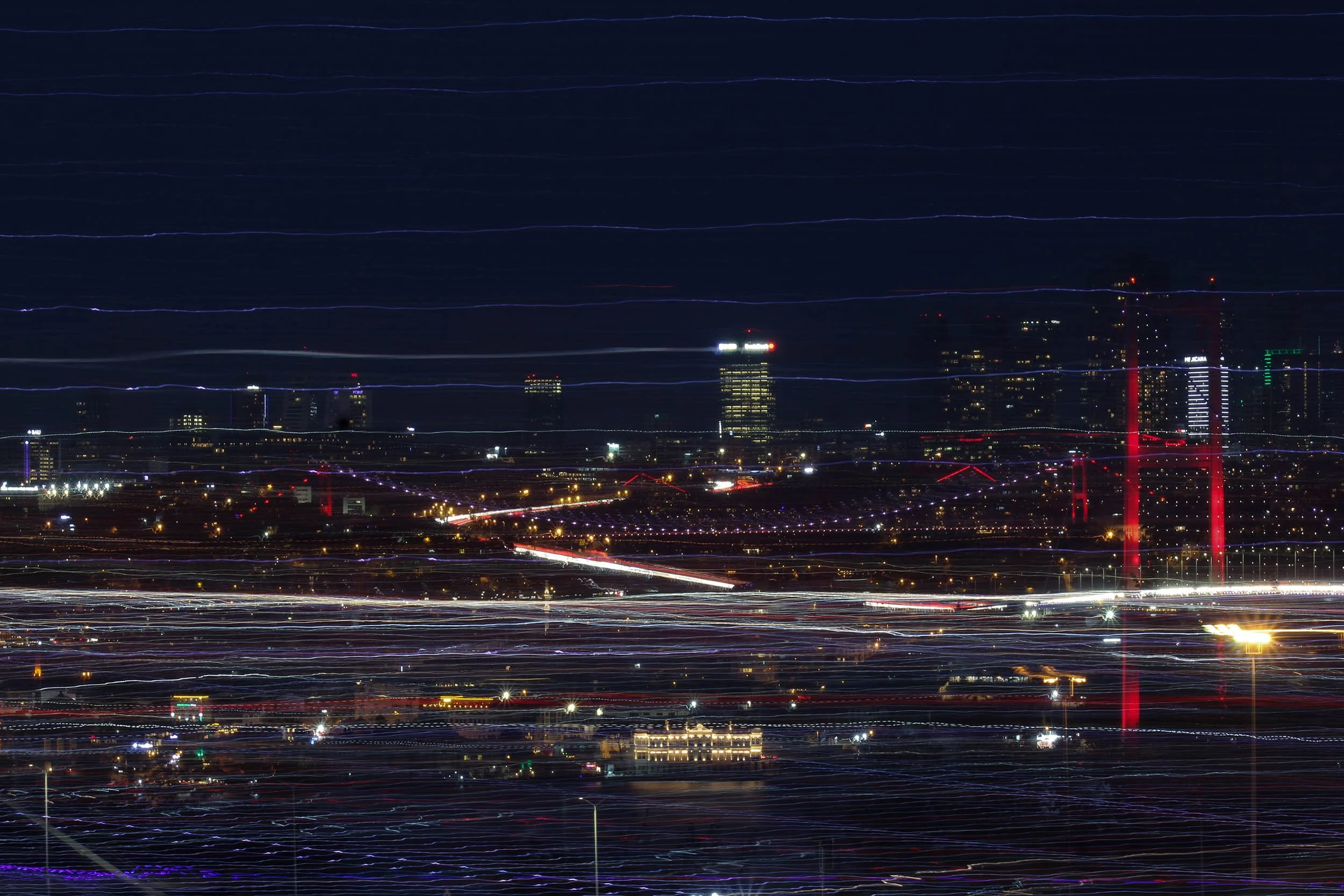
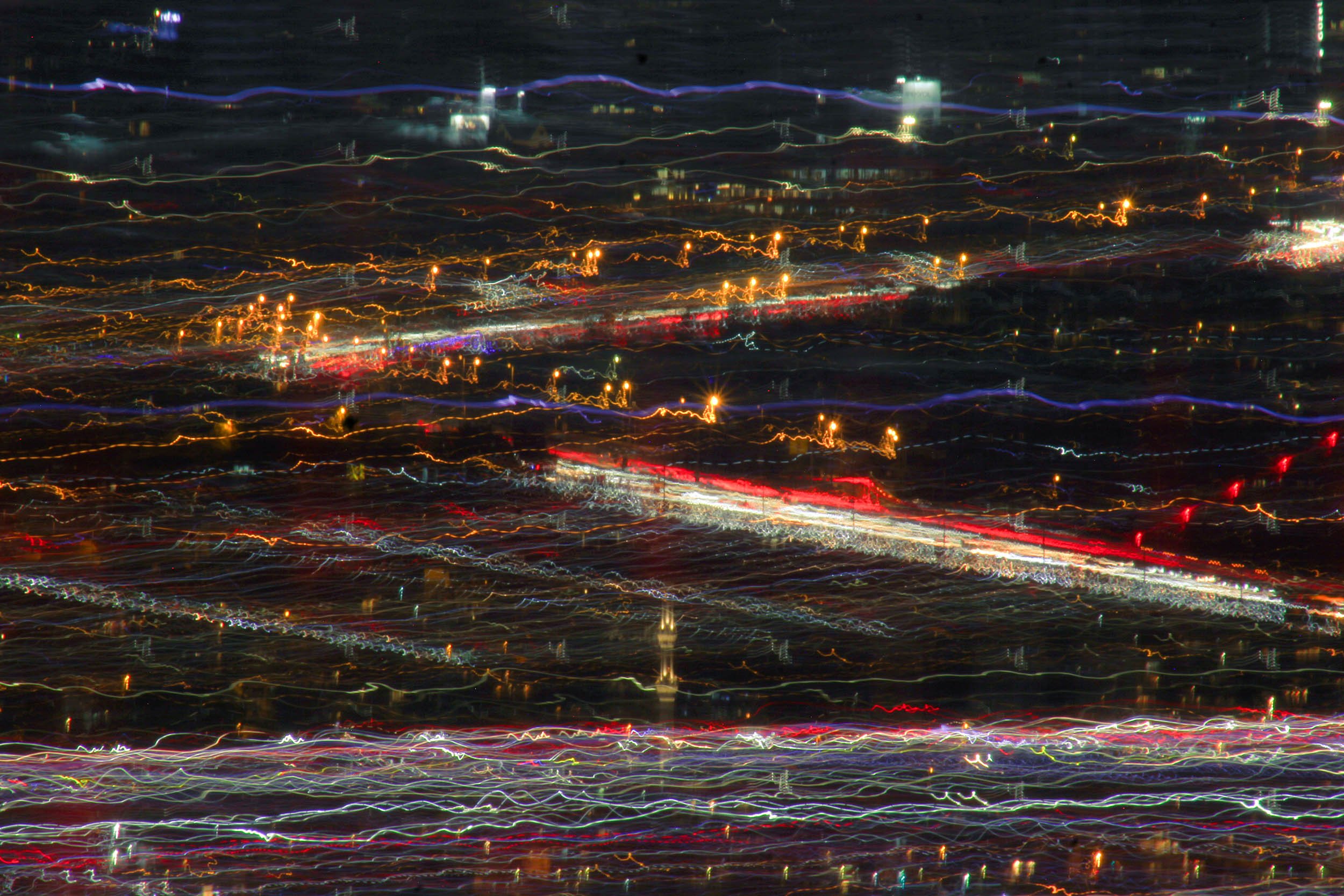
I closed my eyes for a moment. Above the Bosphorus, I saw threads of light walking as if searching for an absent body. The city breathed slowly, and the sea returned images I had not yet seen. The threads moved without haste, like someone reviewing notes in a book they have not yet understood.
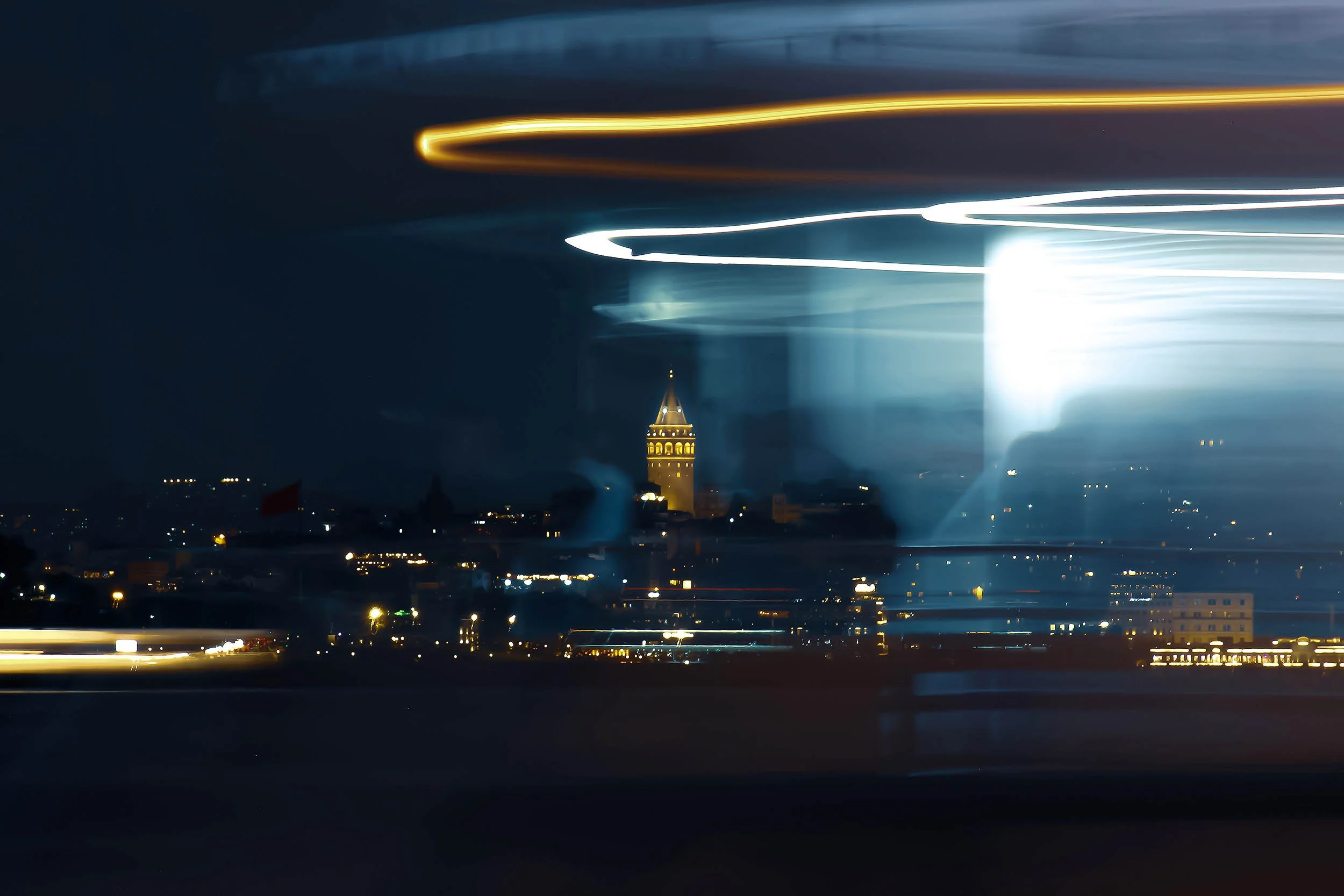
A Long Exposure of Istanbul’s Time
